Baseball arose as a top sport in the mid-1800s, and has been claimed as America’s national pastime. Fans of the game have come to know and love the baseball culture, and the way it is played. The sports world has recently seemed to stray away from baseball and move into other sports, such as football. For example, the most recent Super Bowl reached 100 million viewers, while The World Series only reached 75 million viewers. The difference that attracts viewers to football rather than baseball is that football is a fast pace game with action in every play, while baseball is a slower game. In efforts to sway viewers back towards the national pastime, new rules were implemented to increase the pace of play. Commercials and social media posts have advertised these changes to spread them to younger sports enthusiasts to reach a wider audience. Major League Baseball is making changes to the game of baseball in order to attract a mass audience, but in doing so, they are losing the interest of fans who value the original rules of the game.
Major League Baseball is promoting the league through advertisements online. On platforms such as twitter they target certain users who they think will be interested in the game to help promote the new fast paced style of play in baseball. The main focus of MLB’s promotion has been the action filled game in “the new era.” In Social Media: A Critical Introduction, Christian Fuchs claims that companies present different ads to specific users or groups at same time to spread the ad quicker (Fuchs 2014). This is exactly what the league has done to promote to a newer, young audience who had no interest in the game. They promote on social media sites because it is the easiest way to access this younger crowd, and it avoids the opinions of older fans because they are a minority on new social media sites. According to Fuchs, social media users spread this news amongst the platform by “sharing” on their profiles, which will help it spread to more young users (Fuchs 2014). MLB has completely neglected original fans opinions in the rule changes and advertisements for the new game style.
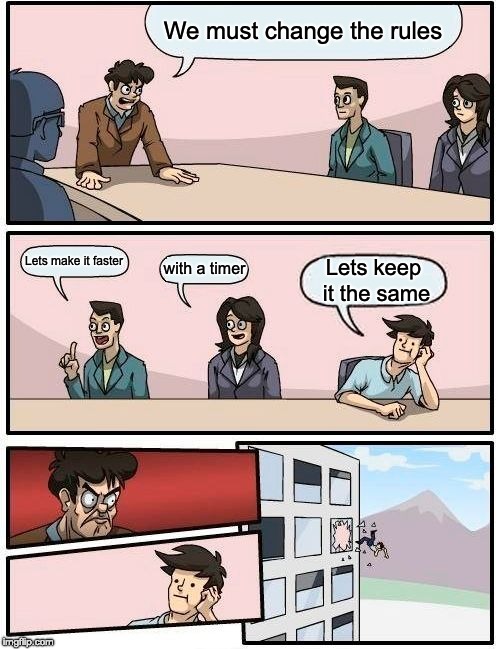
Changing the game has changed what baseball is all about, and that is why old fans are so intrigued by the new rules. MLB has not changed the rules to make the game better, they have changed the game to attract a new crowd and increase their profits. True fans do not care about how long a baseball game is because they enjoy the game for what it is and prefer how it has been played for hundreds of years. In search of higher profit and more viewers, they are aimlessly changing the rules without considering how their main audience feels. It is disloyal of Major League Baseball to change the rules without opinions of fans. In Introduction To Mass Communication: Media Literacy and Culture, Stanley J. Baran states content providers are big media companies in search of audience and profits (Baran 2004). The outcome of this is reduced culture of baseball because the values of the previous culture are thrown away in search of profits.
Rather than uniting current fans and the intended new audience, it seems as if the changes in baseball have caused the two to have differing opinions. Although the new changes and advertisements have brought in more attention to newer fans, primitive fans are displeased by the new changes to the game that holds so much history. This effect can be looked at in terms of culture and its change. Baseball culture is changing and it has caused a divide between the two groups of fans. In Convergence and the Reshaping of Mass Communication Stanley J. Baran claims that culture can limit and divide or liberate and unite (Baran). Through mass communication, such as social media, people debate these new changes. Baran offers that more powerful voices have a more powerful impact on social media as well, so promoters for the new rules overshadow those who are in objection for the new changes (Baran). Not only are the changes causing a divide, but they are also neglecting the opinion of true fans; they are losing their interest.
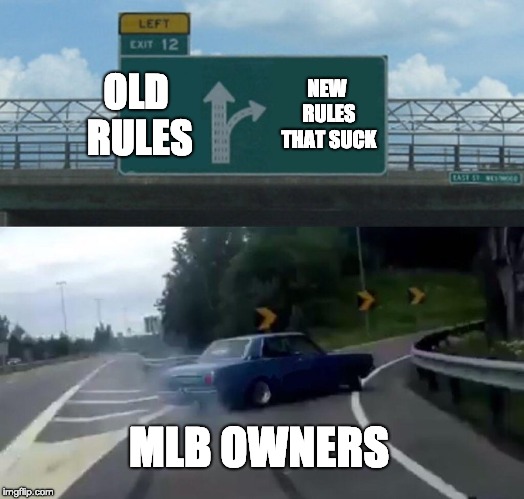
This change in the game has not only been enforced into Major League Baseball, but also into lower levels. As a student-athlete at the division 1 level, I have seen this implemented in one of my games. A batter in one of the games “took too long” to walk to the batter’s box and was penalized one strike before the at bat even started. The crowd began to boo the umpire because they were upset that the new rule gave an unfair advantage to the pitcher due to “taking too long.” It seemed quite ridiculous and was seen as a power trip from the umpire, although he was just enforcing the new rule. The entire stadium reacted negatively to the new change although it made the game speed up. In order to get people accustomed to the new style of play in the Major League Baseball, they have applied it into all levels of baseball. Playing baseball my whole life, I personally dislike the new rules because it is a change to the game I know and love. As a player it just seems unfair that I have to be negatively impacted to attract the attention of those who do not play or have to deal with the repercussions of the rule changes.
Major League Baseball is making changes to the game of baseball in order to attract a mass audience, but in doing so, they are losing the interest of fans who value the original rules of the game. Major League Baseball has used social media as a platform to advertise the new game style and appeal to new fans. They target the newer fans through paid advertisements on social media platforms, where the older fans are not as involved. This is a disadvantage to the older fans to speak their opinion because they are silenced by their scarcity on the platform. With the culture change, they have lost the interest of the fans who enjoy baseball for the history of the sport and its original rules. Rather than adding the new fan base to the old one, they have caused a divide between the two due to differing views on the new rules. Major League Baseball will not increase their overall viewer count by shoving the new rules into the game so hastily, they will lose the love of fans who prefer the original rules.

Works Cited
Baran, Stanley J. Introduction to Mass Communication: Media Literacy and Culture. McGraw-Hill, 2004.
Fuchs, Christian. Social Media: a Critical Introduction. SAGE, 2014.
Baran, Stanley J. Convergence and the Reshaping of Mass Communication.
McGraw-Hill

 Cole Pofek Blogs MCS